Common Oak Pruning Mistakes and How to Avoid Them
Oaks are forgiving trees, but they keep a record of every bad cut. A hacked branch may heal over, yet the decay it invites can take decades to show. Most pruning damage is avoidable. Whether you are shaping a young oak or clearing storm damage from a mature one, patience and a sharp saw will do more for the tree than any dramatic rescue.
Start With the Oak's Own Defences
An oak does not heal the way skin does. It seals. When a branch dies or is removed, the tree grows a barrier around the wound to stop decay spreading into the trunk. The most important part of that barrier is the branch collar: the swollen ring where the branch meets the trunk. It looks like a lump, but it is not an obstacle. It is the tree's first line of defence.
Cut into the collar, and you remove the very tissue that would have sealed the wound. Leave a long stub, and the wood dies back to the trunk anyway. Both mistakes invite fungi and decay. The aim is a cut that is close enough to the trunk to seal well, but not so close that it destroys the collar.
Mistake 1: Pruning at the Wrong Time of Year
Timing matters more than most people expect. In the UK, the safest window for pruning oak is late autumn to late winter, ideally November to February. The tree is dormant, sap movement is slow, and the insects and fungi that cause problems are less active.
Avoid pruning from March to August. That is when birds and bats may be nesting or roosting, and when oak processionary moth caterpillars can be present. Disturbing a nest is both harmful and, for nesting birds, illegal. Pruning in spring can also cause sap to bleed heavily from the cuts. Bleeding is rarely fatal, but it weakens the tree and wastes energy it needs for leaf growth.
If a branch is dead, diseased or dangerous, remove it whenever necessary. For everything else, wait for the dormant season. Choose a dry day, avoid frosty snaps, and never prune just because you have a free afternoon.
Mistake 2: Cutting Flush Against the Trunk
The flush cut is the classic oak pruning error. It happens when someone saws a branch off level with the trunk, slicing through the branch collar. The wound is large, oval and slow to seal. Decay can move straight into the trunk.
A correct cut sits just outside the collar. You should be able to see the swollen ring intact after the branch falls. If you are unsure where the collar is, look for the slight bulge and the change in bark texture. On young oaks the collar is small, so the margin for error is tight. Make a shallow cut first if you need to check your line, then finish cleanly.
Mistake 3: Topping, Lion-Tailing and Over-Pruning
Oaks can live for centuries. They do not need a haircut. Topping, which means cutting large branches back to stubs, creates massive wounds and forces the tree to produce weak, upright regrowth. That regrowth is poorly attached and more likely to break in wind. On an older oak, topping can be a slow death sentence.
Lion-tailing is another common error. It means stripping the inner branches from a limb and leaving foliage only at the tips. The tree looks tidy for a season, then produces epicormic shoots along the bare branches. The limb becomes top-heavy and unstable.
Over-pruning removes too much leaf area in one go. As a general guide, remove no more than a quarter of the live canopy in a single year, and far less from a mature oak. Young trees can be formative pruned over several seasons. Mature oaks should only be pruned for safety, health or access. Remove:
- Dead, diseased or damaged branches
- Branches that cross and rub, creating wounds
- Weak, narrow-angled forks that could split
- Branches obstructing a path, roof or building
- Epicormic growth only if it is competing with the main structure
If you are pruning for appearance alone, put the saw down. The oak's natural shape is usually better than anything imposed on it.
Mistake 4: Tearing Bark and Leaving Stubs
A blunt saw or a heavy branch cut in one go can tear a strip of bark down the trunk. That wound is an open door for disease. Stubs are just as bad. The tree cannot seal over a stub, so the wood dies back and rot enters.
Use sharp tools. Bypass secateurs for small shoots, loppers for branches up to about the thickness of your wrist, and a pruning saw for anything larger. For limbs heavier than your arm, use the three-cut method described below. Never cut above your head with a chainsaw unless you are trained and equipped. Never use a chainsaw on a ladder. If the job needs a chainsaw and a harness, it needs a qualified arborist.
Clean your tools between trees, especially if you have been working on diseased wood. A wipe with a suitable disinfectant takes seconds and prevents spreading problems around the garden.
Mistake 5: Ignoring Wildlife, Law and the Tree's Age
Before you cut, check for wildlife. Birds' nests, bats and hibernating insects can all be using an oak. In the UK, nesting birds and bats are protected by law. If you find a nest or roost, stop and seek advice.
You also need to check whether the tree is protected. A Tree Preservation Order or conservation area status can mean you need permission from your local council before any pruning. This applies even to dead wood in some cases. If you are unsure, contact the council's tree officer before you start. For veteran oaks, the best advice is usually to leave them alone unless a branch is an immediate danger. Seek a professional arborist's assessment.
How to Make a Clean Cut
Good pruning is a sequence, not a single slash. For a branch you have decided to remove, work through these steps:
- Identify the branch collar. It is the swollen ring where the branch joins the trunk or parent limb.
- For a small branch, make one clean cut just outside the collar. Do not cut into the collar and do not leave a stub.
- For a larger branch, use the three-cut method. First, make an undercut about a hand's width from the trunk, cutting a third of the way through from below.
- Second, make a top cut slightly further out from the trunk. The branch will fall, and the undercut will stop the bark tearing.
- Third, remove the remaining stub with a final cut just outside the branch collar.
- Do not paint the wound. Oaks seal their own cuts, and wound paint can trap moisture and delay the process.
- Step back and look at the tree. If you are unsure about the next cut, leave it for another year.
A Calm, Slow Approach
The best oak pruning is often the least. Watch your tree through the seasons. Notice which branches are dead, which are rubbing, and which are growing into danger. Deal with small problems while they are small. Leave the big, old limbs to an arborist, and leave the wildlife to its own timetable.
If you only remember one thing, remember this: the tree has been managing its own structure for longer than you have. Your job is not to impose a shape. It is to remove what is broken or risky, make a clean cut, and then get out of the way. Check permissions, respect nesting season, and sharpen your saw before you start. The oak will do the rest.
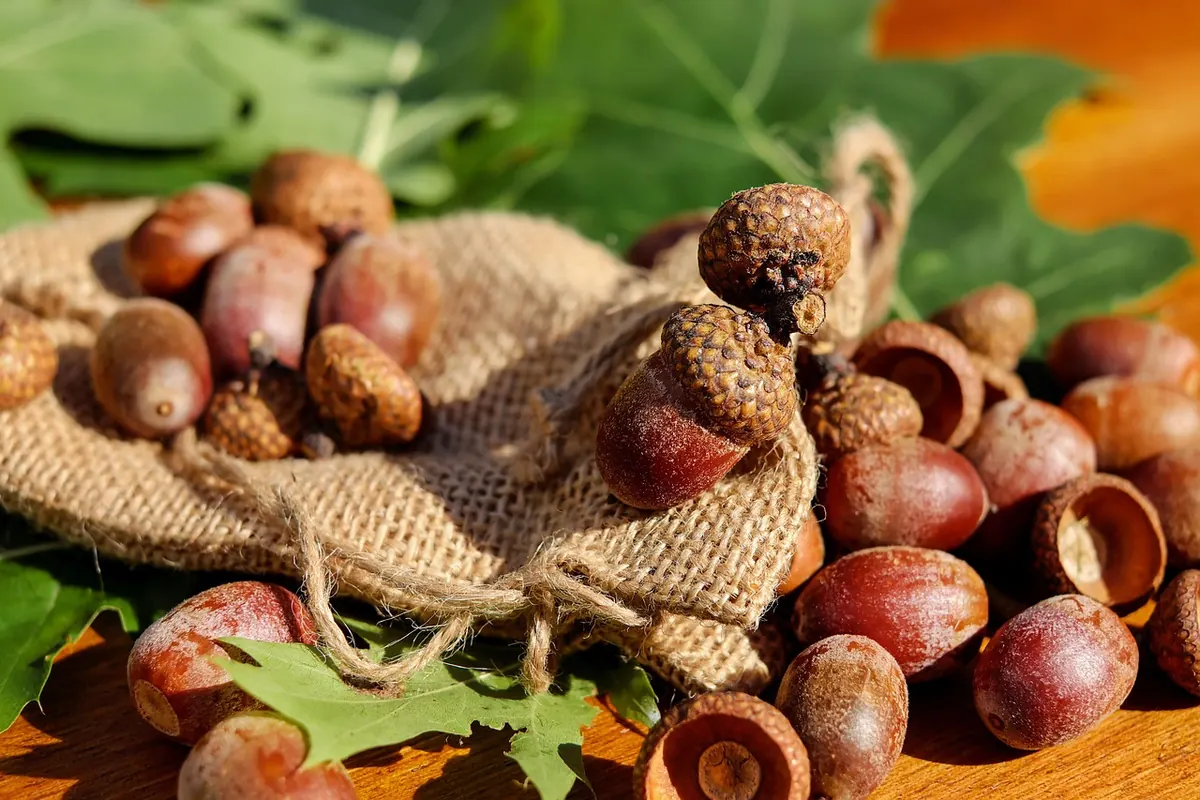
Photo: Couleur / Pixabay
You Might Also Like
Veteran oaks carry centuries of local history that is rarely written down. Here is how to photograph, measure and record one so your findings last.
A practical guide to starting a village oak club, from finding a founding group and planning walks, talks and seed swaps to running small conservation projects.